
Building an AR Copilot for the Data Hall
How I built RackScout, the AR app that won our engineering hackathon and turns a data hall into a navigable AI-assisted workspace.
I work on the network team at Fluidstack and spend real time in our data halls. Anyone who has done that work knows the friction. Everything you need is physically at the rack. The information you need to act on it is not. Its records live in one system, the ticket in another, the device CLI in a terminal. Instead of looking at the hardware in front of you, you end up heads-down on a laptop. You tab between systems and stitch the picture together yourself. And finding the right rack among hundreds of near-identical ones takes longer than it should.
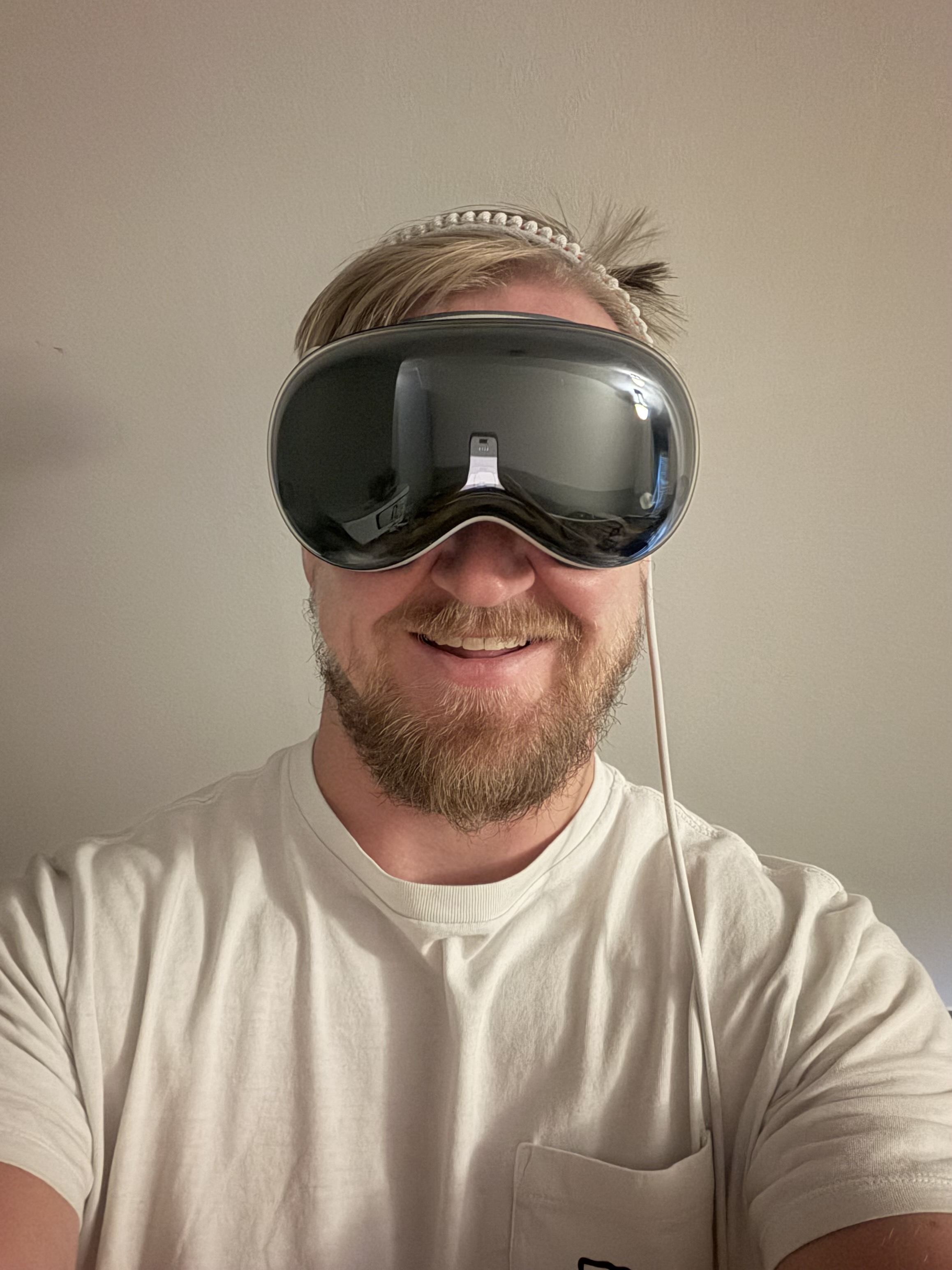
That gap is what I took a swing at during Fluidstack's engineering hackathon. The brief was simple: build whatever you think is worth building. As a network engineer, building apps is not my day job. But I built RackScout, an AR app that brings the data, the tools, and an assistant to the rack itself. We had an Apple Vision Pro on hand to build and test on, so that is where it runs today. The idea is not tied to any one headset. RackScout won first place in the hackathon.
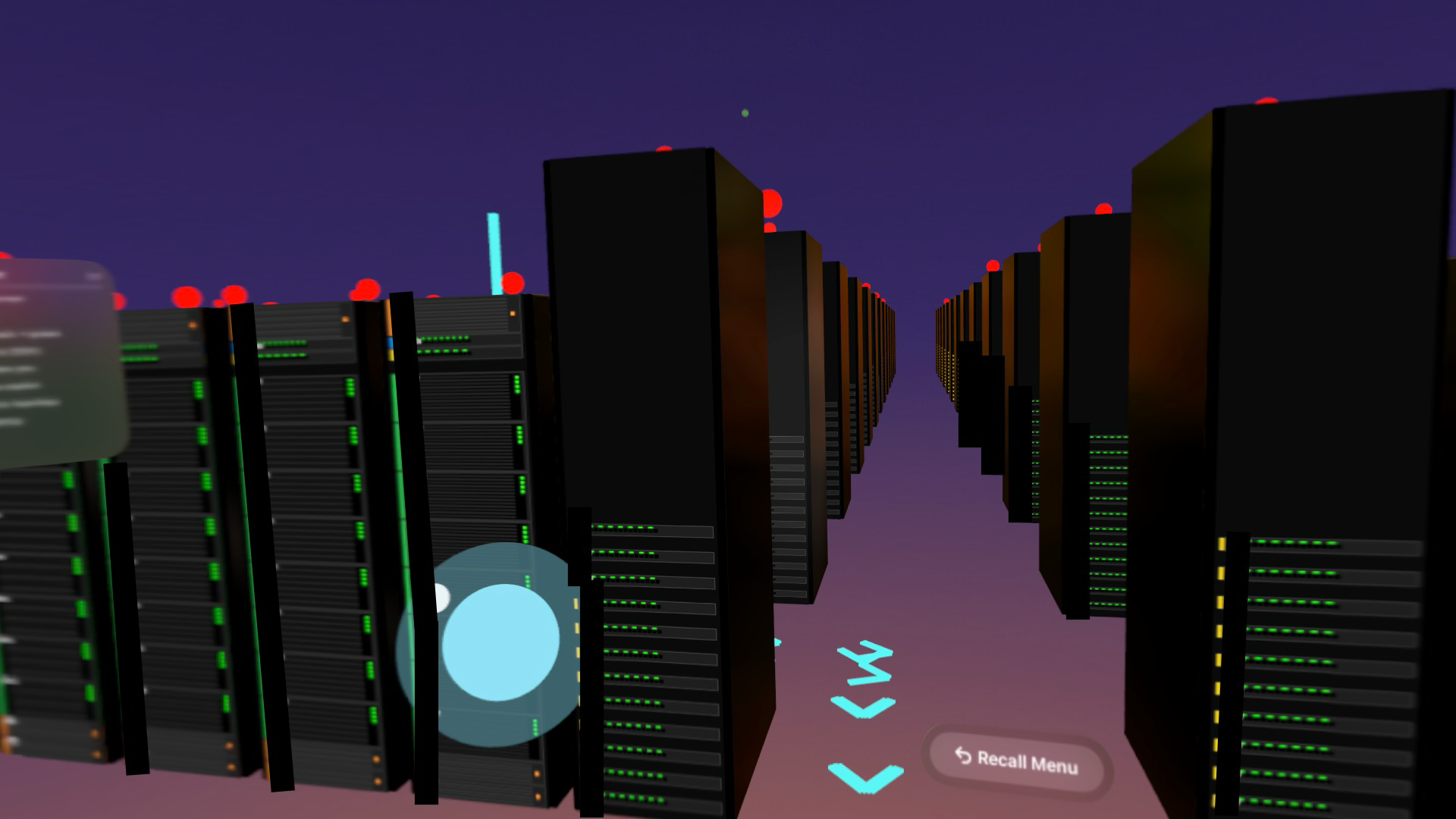
Using it goes like this. You walk into the hall and a glowing path leads you to the rack you need. You look at a rack and tap it, and a few things appear. You can pull up its real rack-and-stack handover checklist. Completing it turns the rack green and marks it ready for production. A simulated NOC ticket routes you straight to the affected rack instead of making you hunt for it. A few other layers sit on top. A power and thermal heatmap covers every rack, and fiber uplink paths show how each rack connects into the network. A tabletop view of the whole data hall flags which racks are production-ready and which still have an open ticket.
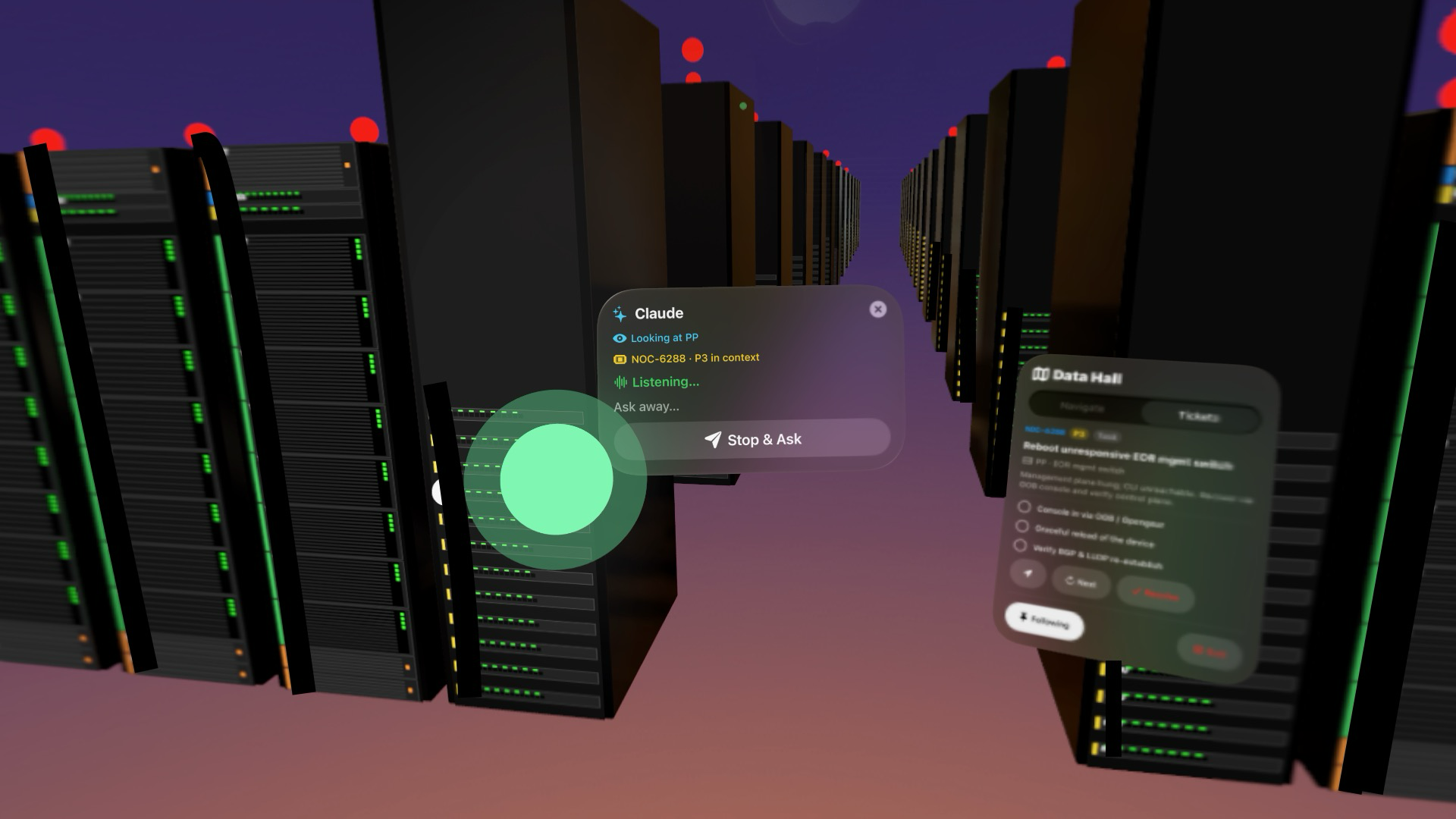
The part I am proudest of is the copilot. You tap a floating assistant and talk to it. Because it knows exactly which rack you are looking at and the ticket you are working, it answers with short step-by-step guidance for that rack's hardware. Completely hands-free.
What I keep coming back to is why this came together so quickly. It says more about Fluidstack than about me. I did not fake a dataset. I pulled from the real placement, inventory, and handover data we run on. The demo was grounded from the start. Nobody scoped the project for me either. The whole brief is to build what you think matters. I shipped to a physical device with no approvals in the loop. Building an AR app is well outside my lane. Modern AI tooling let me move fast in an unfamiliar stack and spend my time on the idea instead of fighting the language. When I needed the network fabric or the commissioning process to be exactly right, the right people were a message away. The people at Fluidstack build at the speed of light. That pace had already produced a deep bench of internal tooling I could pull from, and it is a big part of why a one-day project felt this complete.
RackScout is an early glimpse of where I think this is heading: data hall operations that grow more autonomous over time, with people on the ground carrying tools that can do whatever we ask of them.
It also reflects how Fluidstack works. We build civilization-scale infrastructure for AI, and we build it fast. We deliver gigawatts of compute in 6 months where the industry takes 18 to 24. That includes the buildout behind Anthropic's $50 billion compute commitment. It is one of the largest infrastructure projects in US history. We do it because whoever deploys frontier compute fastest helps decide whether AI expands human freedom or shrinks it. If that mission and that pace sound like your kind of problem, come build the infrastructure for AI at scale and speed with us: fluidstack.com/jobs.